
June 26, 2026
8min read
Health · Science
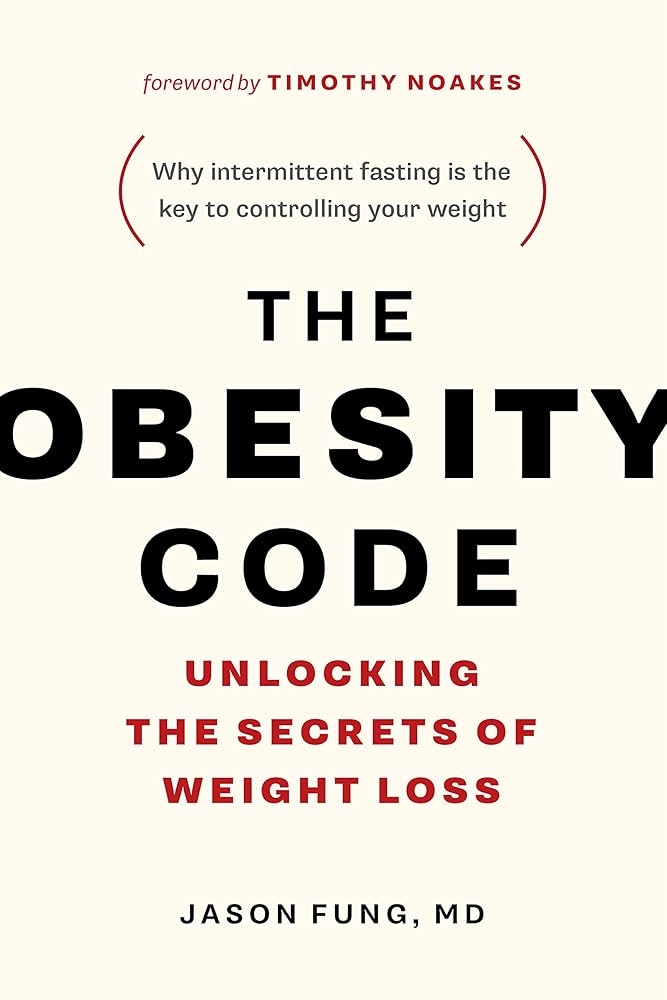
The Obesity Code
By Jason Fung, MD
Obesity is not a calorie problem — it's a hormone problem. And hormones can be reprogrammed.
I read this book because I’ve been struggling with my weight for some years now. The title alone — The Obesity Code — is provocative. It made me think maybe this guy was going to reveal the secret that I’ve been missing. Turns out, he did.
Dr. Fung spends the first half of the book detailing some nutritional fundamentals, describing what macronutrients are — carbohydrates, fats, and protein. Then he moves into the history of obesity in America. It turns out that government policy appears to be one of the largest contributors to the rise in obesity.
In 1977, not by scientific debate and discovery, but by governmental decree, George McGovern convened a tribunal. After several days of deliberation, it was decided that dietary fat was guilty as charged. The result was that the Dietary Guidelines for Americans followed the recommendations of the McGovern report closely — and in turn, Americans followed those guidelines. The food pyramid was born. At its base were breads, pastas, and potatoes. Ironically, these were the exact foods we were later told to avoid in order to stay slim. Starting around 1977, Americans with a BMI of 30 or more drastically increased.
Dr. Fung goes on to discuss many different types of diets — Asian, calorie counting, high-protein, low-carb, high-fat, low-fat, Mediterranean, Paleo. His conclusion is that they all have at least one thing in common: they suggest cutting out or reducing added sugars. Fung explains that in the short term, most diets will work to reduce body fat. However, over the long run, the body adapts and compensates.
His main argument is that obesity is not simply a calorie problem — it’s a hormone problem. The two primary hormones involved are insulin and cortisol, with insulin being the major driver. High insulin levels lead to weight gain. Lower insulin levels lead to weight loss. Cortisol, the stress hormone, raises insulin levels, which in turn can lead to weight gain.
The solution, according to Fung, is to reprogram the body’s set weight — essentially rewriting “the code.” In short: eliminate added sugars, control when we eat, reduce stress, and get the proper amount of sleep.
Fasting — long periods without eating — creates extended periods of low insulin in the body. According to Fung, this is one of the most effective ways to reset your body’s set weight. He suggests fasting for 24 hours every other day, or 36 hours every other day.
Sleep hygiene is equally important. Sleep induced by medication is not the same quality as natural sleep, as it disrupts REM and non-REM cycles. Sleep in a dark room, keep it cool, wear loose clothing, keep regular hours, get 7–9 hours, sunlight early in the morning, no TVs in the bedroom.
I wouldn’t consider The Obesity Code a page-turner. However, I do consider it interesting — and I believe it should be required reading for everyone. The information is presented in a well-balanced mix of science and real-world application. I now have a deeper understanding of my body and how to better control my weight.
"Most diets work in the short term. Then the body adapts. The real fix is rewriting the code your body runs on."
- Lessons Learned
- Applied To Life & Business